
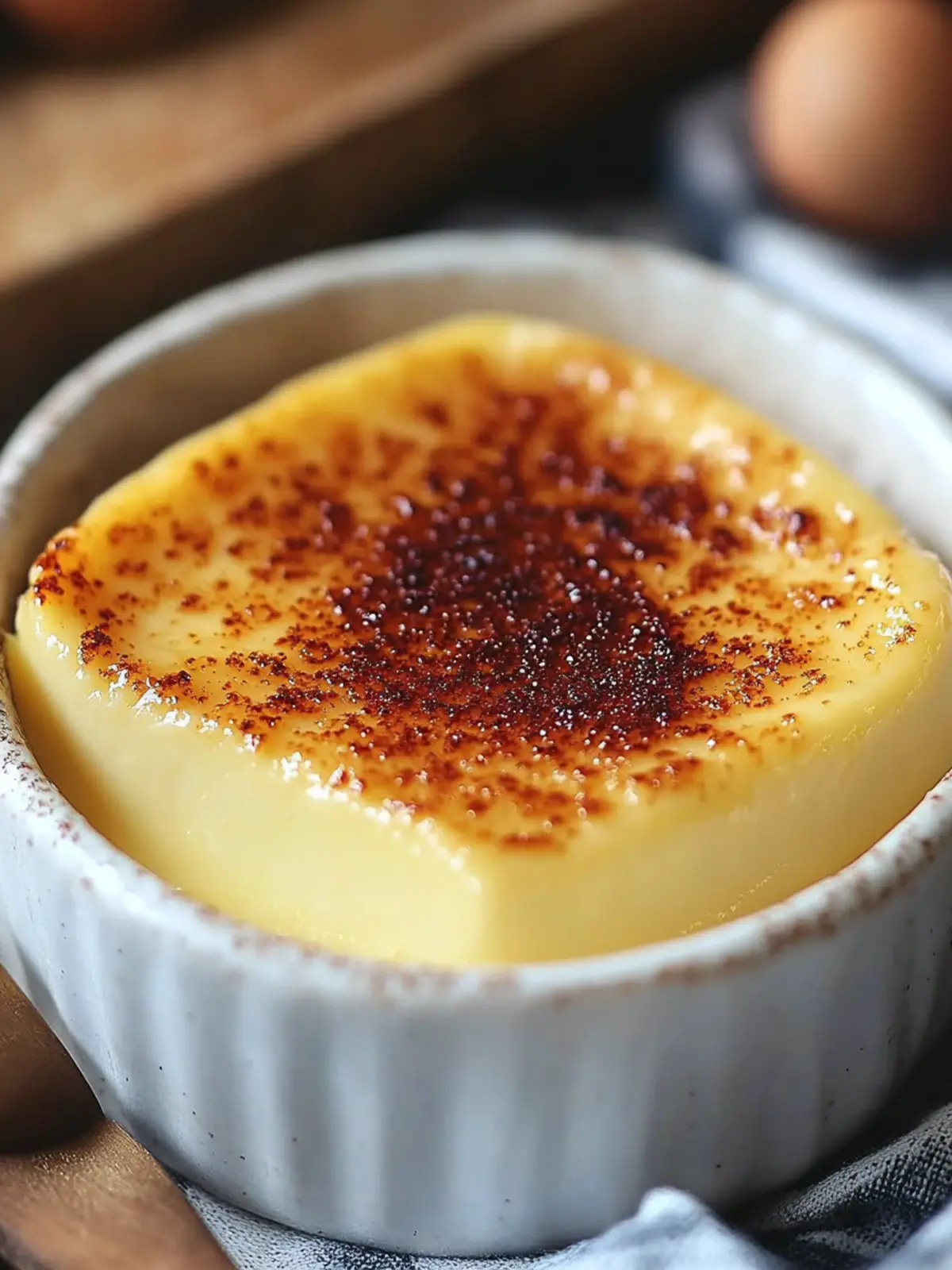
There’s nothing quite like the sensation of a silky slice of egg custard gracing your dessert table, evoking warmth and comfort with every bite. This easy and creamy fail-proof egg custard came to life in my kitchen on a rainy afternoon—one of those days when I craved something sweet but didn’t want to fuss with complicated recipes. With just three simple ingredients—eggs, milk, and sugar—I found myself whipping up a dessert that truly felt like a warm hug in a bowl.
As the custard baked, the delightful aroma of vanilla wafted through the house, practically enticing everyone to gather around. Topped with a sprinkle of nutmeg, it was not only the perfect way to end a meal but also a reminder of the simple joys of home-cooked treats. Whether you’re looking to impress guests or just need a sweet escape from fast food, this custard is sure to become a regular feature in your dessert lineup. Trust me, it’s so easy, you’ll be wondering why you haven’t made it sooner!

Why is Egg Custard a Must-Try Dessert?
Irresistible Comfort: This egg custard delivers an unparalleled warmth and coziness with each creamy bite, making it a perfect end to any meal.
Effortless Preparation: Simple enough for beginners, you’ll wow your family or guests without spending hours in the kitchen.
Versatile Flavor Twists: With options to infuse vanilla, almond, or even citrus zest, you can customize it to fit any taste preference.
Diet-Friendly Adaptations: Easily make it dairy-free by swapping milk for your favorite plant-based alternative, ensuring everyone can indulge.
Elegant Presentation: Serve it chilled and garnished with nutmeg or fresh fruit for a sophisticated touch that looks as good as it tastes.
Transform your dessert repertoire with this timeless classic that’s bound to impress!
Egg Custard Ingredients
• Create the perfect creamy custard at home with these essentials!
For the Base
- Eggs – Essential for richness and a silky texture; for vegan options, consider using a commercial egg replacer, noting that texture may vary.
- Milk – Whole milk enhances creaminess; for a dairy-free variation, try almond or coconut milk, but be aware the flavor will change.
- Sugar – Granulated sugar is the standard choice; brown sugar can add depth, or substitute with stevia for lower calories.
For Flavoring
- Vanilla Extract – Provides that classic custard flavor; feel free to swap with vanilla essence for a milder taste.
- Salt – Enhances the overall flavor of the custard; just a pinch does the trick!
Let’s dive into transforming these simple ingredients into a delicious egg custard masterpiece!
How to Make Easy and Creamy Egg Custard
-
Preheat the oven to 325°F (165°C). This ensures a stable baking environment for the perfect custard.
-
Whisk the eggs gently in a medium bowl until they’re combined without introducing too much air. This will keep your custard smooth and creamy.
-
Heat the milk in a saucepan over medium heat until you see small bubbles forming around the edges—do not let it boil! This step is crucial for tempering your eggs.
-
Pour the warm milk into the eggs gradually while whisking continuously. This will balance the temperatures and prevent scrambling the eggs.
-
Mix in the sugar, vanilla extract, and salt until everything is fully dissolved and harmonious. You want a smooth, sweet blend here!
-
Strain the mixture through a fine sieve into another bowl to catch any lumps, ensuring an ultra-smooth custard.
-
Distribute the custard into ramekins, filling them about 3/4 full. This gives space for the custard to puff slightly while baking.
-
Create a water bath by placing the ramekins in a larger baking dish and adding hot water halfway up the sides. This gentle cooking method helps achieve a silky texture.
-
Bake for 35-40 minutes, or until the custard is set but still slightly jiggly in the center. A toothpick inserted should come out clean but moist.
-
Cool the ramekins at room temperature, then refrigerate them for at least 2 hours before serving. This chilling time is essential for the custard to fully set.
-
Garnish with a sprinkle of nutmeg or your favorite topping before serving to add an extra touch of flavor and beauty.
Optional: Drizzle with caramel for a delightful contrast of flavors.
Exact quantities are listed in the recipe card below.

What to Serve with Easy and Creamy Fail-Proof Egg Custard?
End your meal on a high note with perfect pairings that elevate your delightful dessert experience.
-
Whipped Cream: A dollop of freshly whipped cream adds a light and airy contrast to the creamy custard, enhancing its richness.
-
Fresh Berries: Juicy strawberries or tart raspberries provide a bright burst of flavor and vibrant color, balancing the sweetness of the custard.
-
Caramel Sauce: Drizzling warm caramel on top creates a pleasing sweet-and-salty flavor combination that perfectly complements the egg custard’s smoothness.
-
Shortbread Cookies: The buttery crunch of shortbread cookies alongside the custard creates a delightful texture contrast that makes each bite more enjoyable.
-
Mint Leaves: A sprig of fresh mint on top not only adds elegance but also introduces a refreshing note that elevates the rich creaminess.
-
Chai Tea: Pair with a cup of chai tea for a warm, spiced contrast that enhances the custard’s comforting sweetness and makes for a lovely after-dinner drink.
How to Store and Freeze Egg Custard
- Fridge: Cool your egg custard at room temperature, then refrigerate it in an airtight container for up to 3 days. This keeps it fresh and ready for those sweet cravings.
- Freezer: Egg custard can be frozen for up to 2 months. Pour it into freezer-safe containers, leaving some space at the top for expansion. Thaw overnight in the fridge before serving.
- Reheating: To enjoy your leftover custard, gently reheat in the microwave or oven, adding a splash of milk if needed to restore creaminess.
- Texture Preservation: When storing, avoid stacking containers to prevent any pressure on the custard surface, which could lead to textural changes.
Expert Tips for Egg Custard
- Watch Temperature: Keeping the milk warm but not boiling is key; it prevents cooking the eggs and ensures a silky egg custard.
- Avoid Air Bubbles: Whisk the eggs gently to avoid incorporating air, which could lead to a foamy texture instead of smooth creaminess.
- Proper Baking: Check the custard towards the end of baking; overcooking can make it grainy. A slight jiggle in the center is perfect!
- Flavor Infusions: Experiment with infusing warm milk with vanilla, citrus zest, or other extracts to customize your egg custard.
- Storage Tips: Once cooled, store leftovers in an airtight container in the refrigerator for up to 3 days to maintain freshness.
Make Ahead Options
These Easy and Creamy Egg Custards are perfect for busy home cooks looking to streamline their meal planning! You can prepare the custard mixture up to 24 hours in advance by following all the steps up until putting it in the ramekins. Simply strain the mixture, pour it into your ramekins, and cover them tightly with plastic wrap before refrigerating. This helps maintain their creamy texture and freshness. When you’re ready to bake, just create the water bath and follow the baking instructions, enjoying deliciously smooth custards that taste as if they were made fresh! Store any leftovers in an airtight container in the refrigerator for up to 3 days for delightful snacks or dessert.
Egg Custard Variations
Feel free to get creative with your egg custard by trying these delightful variations and substitutions that cater to various tastes!
-
Dairy-Free: Substitute whole milk with almond, coconut, or soy milk for a lighter, vegan-friendly custard experience. Just note that the flavor will change slightly!
-
Sugar Alternative: Swap granulated sugar for brown sugar or a sugar substitute like stevia for a different sweetness profile and fewer calories. Perfect for those mindful of their sugar intake!
-
Flavor Infusion: Enhance your custard with a splash of almond extract or a burst of citrus zest. These delightful additions can refresh your traditional recipe and awaken the senses.
-
Chocolate Custard: Melt a bit of dark chocolate into the warm milk before mixing it with the eggs. This transformation turns your custard into a rich chocolate delight that chocolate lovers will adore.
-
Spiced Variation: Add a pinch of cinnamon or nutmeg directly into the egg mixture for a warm, spiced flavor profile that brings comfort and familiarity to the dessert.
-
Caramel Swirl: Before baking, drizzle some caramel sauce into your egg custard mixture for bursts of sweetness and an indulgent twist. It’s a delicious surprise in every spoonful!
-
Fruit-Infused: Blend some pureed fruits, such as bananas or berries, into the egg mixture to create a fruity custard that brings an exciting twist to classic flavors.
-
Nutty Crunch: Top off your baked custard with chopped pistachios or toasted almonds for a lovely crunch that contrasts beautifully with the creamy texture.
Explore these options to personalize your egg custard, turning it into a unique dessert that’s perfect for any occasion!
Easy and Creamy Fail-Proof Egg Custard Recipe FAQs
What kind of eggs should I use for egg custard?
Absolutely! For the best flavor and texture, use large, fresh eggs. Fresh eggs will yield a richer taste, and their quality greatly affects the final product. If you’re looking for a vegan alternative, consider using a commercial egg replacer, but keep in mind that the texture may change.
How should I store leftover egg custard?
After cooling, store the egg custard in an airtight container in the refrigerator for up to 3 days. Make sure the custard is completely chilled to prevent condensation inside the container. Just a personal tip: it’s easier to enjoy when served in pretty ramekins!
Can I freeze egg custard?
Certainly! To freeze your egg custard, place it in freezer-safe containers, leaving some space at the top for expansion. You can freeze it for up to 2 months. When you’re ready to enjoy it, thaw it overnight in the refrigerator. To serve, gently reheat in the microwave or oven, adding a splash of milk if necessary to restore its creamy texture.
Why is my egg custard grainy?
Very! A grainy texture usually means the eggs were overcooked. Make sure to bake it until just set, with a slight jiggle in the center. If you do find yourself with a grainy custard, don’t worry! You can consider serving it with whipped cream or blending it to restore a smoother consistency.
Is this recipe suitable for people with dietary restrictions?
Absolutely! This egg custard can easily be made dairy-free by substituting whole milk with almond, coconut, or soy milk. Just keep in mind that these substitutions may alter the flavor slightly. If you’re monitoring sugar intake, using a sugar substitute like stevia is also a great option. Enjoy making this treat fit for everyone!

Creamy Egg Custard That Always Turns Out Perfectly
Ingredients
Equipment
Method
- Preheat the oven to 325°F (165°C).
- Whisk the eggs gently in a medium bowl until combined.
- Heat the milk in a saucepan over medium heat until small bubbles form around the edges.
- Pour the warm milk into the eggs gradually while whisking continuously.
- Mix in the sugar, vanilla extract, and salt until fully dissolved.
- Strain the mixture through a fine sieve into another bowl.
- Distribute the custard into ramekins, filling them about 3/4 full.
- Create a water bath by placing the ramekins in a larger baking dish and adding hot water halfway up the sides.
- Bake for 35-40 minutes, or until the custard is set but slightly jiggly in the center.
- Cool the ramekins at room temperature, then refrigerate for at least 2 hours before serving.
- Garnish with nutmeg or your favorite topping before serving.