
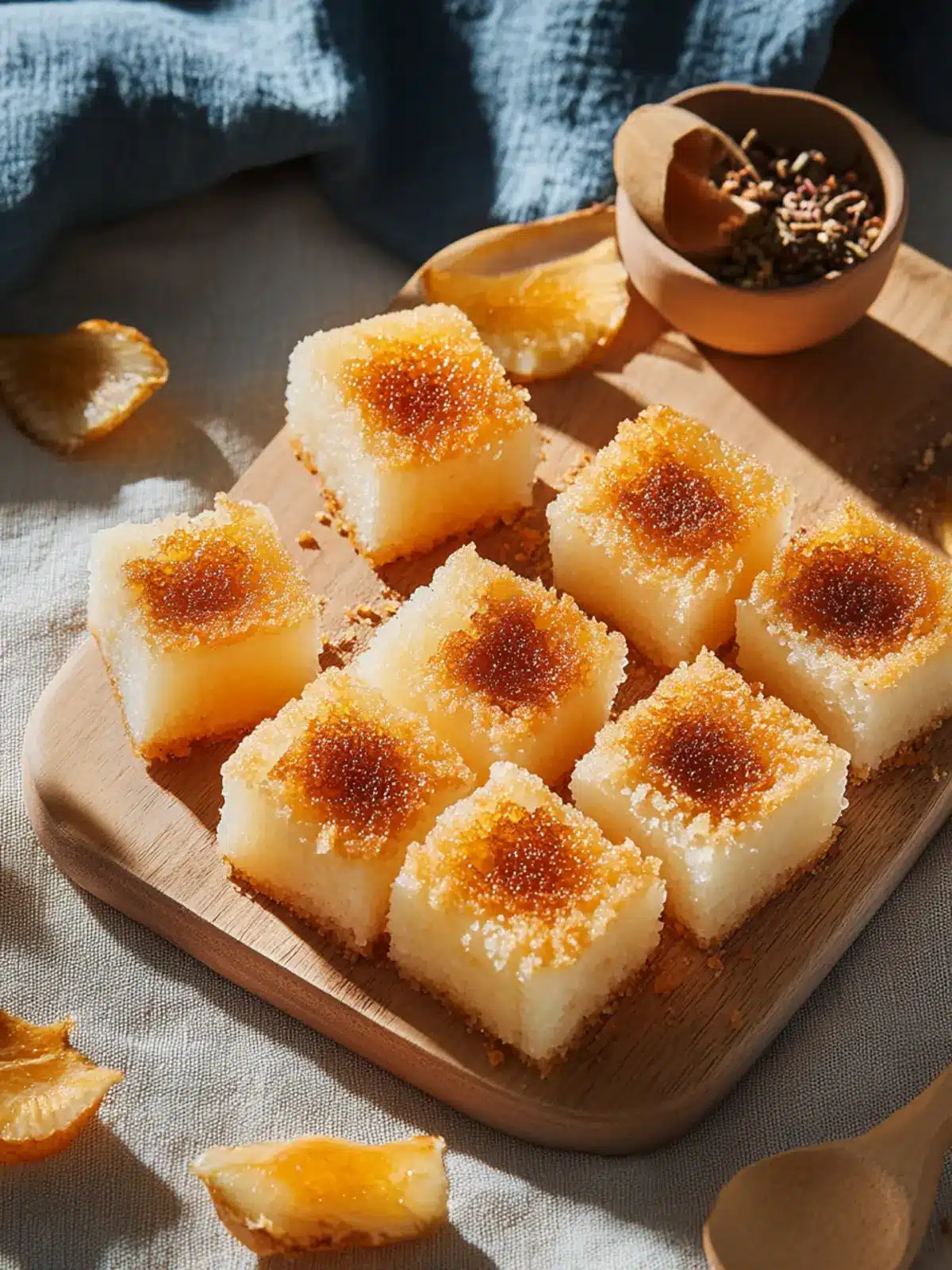
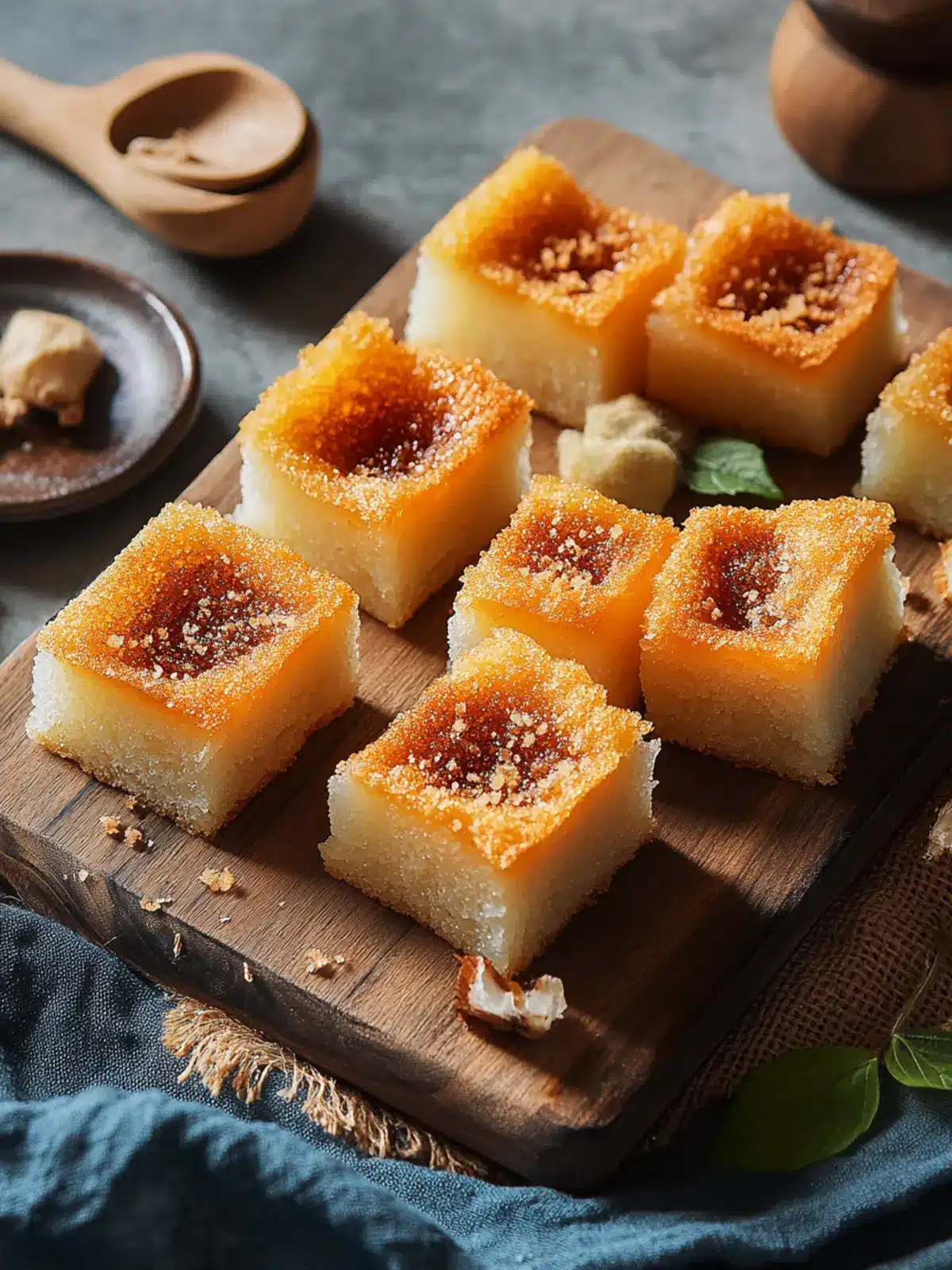
The moment I unwrapped a beautifully baked slice of Nian Gao, the sweet, warm aroma enveloped my kitchen, inviting everyone to gather around. This traditional Chinese mochi cake, celebrated during Lunar New Year, isn’t just delicious—it’s a symbol of prosperity and good fortune. Imagine biting into a delightful chewy texture, complemented by a lightly crisp exterior. Whether served warm or at room temperature, this dessert embodies a multi-layered experience that is sure to impress.
I discovered this gem while on a quest to break free from the same old dessert routine, and I couldn’t wait to share it with you. With its gluten-free qualities—thanks to glutinous rice flour—this Nian Gao recipe offers both ease and flavor without sacrificing tradition. Perfect for family gatherings or cozy evenings at home, it’s time to embrace the joy of making this delightful treat and create lasting memories around the table. Let’s dive into the preparation and discover the magic of Nian Gao together!

Why is Nian Gao so special?
Chewy Texture: Nian Gao is not just any dessert; its chewy, satisfying texture makes each bite an experience.
Cultural Significance: This cake is deeply rooted in tradition, symbolizing prosperity and good fortune—ideal for the Lunar New Year.
Versatile Variations: By experimenting with flavors like matcha or coconut, you can tailor the recipe to suit your taste.
Easy to Prepare: With simple ingredients and straightforward steps, making this mochi cake is a breeze, perfect for both novice and experienced bakers.
Crowd-Pleaser: Whether enjoyed at festive gatherings or cozy family nights, Nian Gao brings everyone together for a delightful shared experience.
Unlock the magic of this dessert and impress your friends and family with your culinary flair!
Nian Gao Ingredients
For the Cake
- Glutinous Rice Flour – Use this specific flour for that essential chewy texture in your Nian Gao.
- Sugar – Sweetens the cake, balancing the natural nuttiness of the rice flour.
- Eggs – Adds proteins that help create a stable structure while enhancing the cake’s richness.
- Coconut Milk (or Whole Milk) – Provides creamy richness, contributing healthy fats and moisture to the cake.
- Baking Powder – This leavening agent helps the cake rise, giving it a light crumb for that perfect bite.
- Butter (or Oil) – Ensures the cake stays moist and tender; use unsalted butter for better flavor.
Optional Flavorings
- Vanilla Extract – Adds a warm, aromatic depth to the cake, elevating the overall taste experience.
- Sesame Seeds – Sprinkle these for added crunch and a nutty aroma that compliments the cake beautifully.
- Citrus Zest – A touch of zest (like lemon or orange) enhances the sweetness and adds a refreshing twist.
Indulge in the delightful textures and rich flavors of Nian Gao, and let this traditional treat become a cherished part of your culinary repertoire!
How to Make Nian Gao
-
Preheat the Oven: Set your oven to 350°F (175°C) and thoroughly grease an 8-inch round baking dish to prevent the cake from sticking. This step is crucial for easy removal later!
-
Whisk Ingredients: In a large mixing bowl, whisk the eggs and sugar together until they become well combined and slightly frothy. This will help create a light texture in your cake.
-
Combine Wet Ingredients: Pour in the melted butter (or oil) and coconut milk, stirring until the mixture is smooth and creamy. The richness from the coconut milk will add depth to the flavor!
-
Mix the Dry Ingredients: Gradually sift in the glutinous rice flour and baking powder, stirring to form a thick batter. Make sure there are no lumps—it should be smooth and slightly sticky!
-
Bake the Cake: Pour the batter into the prepared dish and bake for 30-35 minutes, or until the top is lightly golden and a toothpick inserted comes out clean. The cake should feel firm yet springy to the touch!
-
Cool and Slice: Allow the Nian Gao to cool in the pan for about 10 minutes before transferring it to a wire rack. Once slightly cooled, slice it into squares or wedges for serving.
Optional: For added texture, pan-fry leftover slices until golden and slightly crispy!
Exact quantities are listed in the recipe card below.
Nian Gao Variations & Substitutions
Feel free to get creative and personalize your Nian Gao to suit your taste and dietary needs!
- Dairy-Free: Substitute coconut milk for any plant-based milk like almond or oat milk for a lighter option.
- Nutty Twist: Replace sesame with creamy almond or peanut butter, infusing a rich, nutty flavor.
- Fruit-Infused: Add diced ripe bananas or shredded apples into the batter for a fruity surprise that elevates the sweetness.
- Matcha Magic: Incorporate matcha powder into the batter for a vibrant green tea touch that adds a unique flavor and color.
- Spicy Kick: Mix in a pinch of cayenne pepper or ground ginger for a subtle heat that beautifully contrasts the sweetness.
- Flavored Sugar: Use flavored sugar like vanilla or cinnamon sugar to enhance sweetness with an aromatic pop in every bite.
- Flavored Zest: Stir in lemon or orange zest for a refreshing citrus note that brightens the cake and adds zesty complexity.
- Tropical Delight: Top with fresh mango or pineapple slices for a tropical twist that combines chewy cake with refreshing fruitiness.
Expert Tips for Nian Gao
-
Choose the Right Flour: Ensure you use glutinous rice flour, as regular rice flour won’t deliver that signature chewy texture of Nian Gao.
-
No Lumps Allowed: Mix the batter thoroughly to avoid lumps, as this promotes even baking and results in a smooth texture throughout the cake.
-
Cooling is Key: Let the Nian Gao cool slightly before cutting. This step is essential for achieving clean slices and maintaining the cake’s integrity.
-
Experiment with Flavors: Don’t hesitate to try different flavorings like matcha or citrus zest to create your unique twist on this Nian Gao recipe.
-
Sizzling Leftovers: If you have leftover cake, consider pan-frying slices for a delightful crispy outer layer, enhancing both texture and taste.
What to Serve with Nian Gao?
The delightful chewy texture and subtle sweetness of this mochi cake are perfect for an array of accompanying dishes.
-
Hot Green Tea: The earthy notes of green tea provide a lovely balance, enhancing the cake’s sweetness and adding a refreshing touch.
-
Coconut Sticky Rice: This dish mirrors the chewy texture of Nian Gao while adding a delightful variation of flavor, creating a memorable dessert experience.
-
Fresh Fruits: Slices of ripe mango, kiwi, or pineapple introduce a burst of juicy freshness, perfectly complementing the cake’s warmth and comforting nature.
-
Sesame Ice Cream: A scoop of this creamy treat adds a delicious contrast and a nutty twist that echoes the flavors of the cake—truly a heavenly pairing.
-
Almond Milk: A glass of chilled almond milk offers a subtle nutty flavor that enhances the creamy undertones of the Nian Gao while adding a refreshing element.
-
Sweet Red Bean Soup: This dessert soup brings a delightful warmth and varies the texture profile, offering a soothing finish to the meal.
-
Fruit Tea: A light, floral fruit-infused tea adds an aromatic companion able to cleanse the palate, making it easier to savor each bite of Nian Gao.
-
Sesame Balls: For a festive touch, serve these crispy snacks alongside the cake. Their crunch and sweetness create a delightful contrast in textures.
Make Ahead Options
Nian Gao is a fantastic dessert for meal prep, allowing busy cooks to save time without sacrificing quality! You can prepare the batter up to 24 hours in advance; simply mix all your ingredients and store the batter in an airtight container in the refrigerator. When you’re ready to bake, just pour the chilled batter into the greased dish and bake as directed. If you have leftovers, Nian Gao can be stored at room temperature for up to 3 days or in the fridge for longer preservation; reheat slices in a pan to restore that delightful crispiness. This way, you’ll enjoy a deliciously chewy mochi cake with minimal effort when it’s time to celebrate!
How to Store and Freeze Nian Gao
-
Room Temperature: Nian Gao can be stored at room temperature for up to 3 days. Be sure to wrap it in plastic wrap or keep it in an airtight container to maintain its chewy texture.
-
Fridge: For longer storage, keep the Nian Gao in the refrigerator for up to a week. Place it in an airtight container to prevent drying out and absorbing any odors.
-
Freezer: If you want to save it for later, freeze the cake for up to 3 months. Slice the Nian Gao into portions, wrap them tightly in plastic wrap, and then place them in a freezer-safe bag.
-
Reheating: To enjoy leftover slices, reheat them in a pan over medium heat for a few minutes on each side, allowing the exterior to crisp up while keeping the center tender and chewy.
Nian Gao Recipe FAQs
What kind of glutinous rice flour should I use?
It’s essential to use glutinous rice flour specifically; regular rice flour will not yield the distinctive chewy texture that makes Nian Gao so special. Look for it in Asian grocery stores or the international aisle of your supermarket, and ensure it’s labeled as glutinous.
How should I store leftover Nian Gao?
You can store Nian Gao at room temperature for up to 3 days. Wrap it in plastic wrap or place it in an airtight container to keep it fresh. For longer preservation, refrigerate it for up to a week, ensuring it’s also in an airtight container to avoid drying out.
Can I freeze Nian Gao?
Absolutely! You can freeze Nian Gao for up to 3 months. Slice the cake into portions, wrap each slice tightly in plastic wrap, and then place it in a freezer-safe bag. When you’re ready to enjoy it, simply thaw at room temperature or reheat slices in a pan for that signature chewy texture!
What if my Nian Gao is too dense?
If your cake turns out too dense, it may be due to overmixing the batter or not enough leavening agent. When preparing the batter, mix until just combined to prevent developing excessive gluten. If needed, ensure that your baking powder is fresh for reliable rise.
Is Nian Gao safe for people with gluten allergies?
Yes, Nian Gao is naturally gluten-free when made with glutinous rice flour. However, always double-check that the flour you’re purchasing is labeled gluten-free, as some brands may be processed in environments that contain gluten, leading to cross-contamination.
Can pets eat Nian Gao?
It’s not advisable for pets to consume Nian Gao. The sugars and potential coconut milk content may upset their stomachs. Always consult with a veterinarian before offering any human food to your furry friends.

Mouthwatering Nian Gao: Chewy Mochi Cake for Good Fortune
Ingredients
Equipment
Method
- Preheat the oven to 350°F (175°C). Grease a baking dish thoroughly.
- Whisk together the eggs and sugar in a large bowl until well combined.
- Mix in melted butter or oil, followed by the coconut milk, until smooth.
- Gradually add the glutinous rice flour and baking powder, stirring until a thick batter forms.
- Pour the batter into the prepared dish and spread evenly. Bake for 30-40 minutes until golden.
- Cool the cake slightly in the dish before slicing for serving.