
There’s something invigorating about the scent of garlic sizzling in hot oil, especially when it ushers in a dish as rich in flavor as Spicy Gochujang Eggs. This delightful recipe has quickly become a staple in my kitchen, effortlessly transforming humble eggs into a protein-packed masterpiece that never fails to impress.
As I enjoy the magical fusion of sweet and spicy gochujang sauce mingling with perfectly boiled eggs, I’m reminded of how versatile this dish truly is. Whether you’re starting your day or prepping for an impromptu dinner party, these eggs offer a touch of Korean flair that will tantalize your taste buds.
Best of all, the beauty of Spicy Gochujang Eggs lies in their simplicity—enjoy them with a runny yolk for a luscious dip or opt for hard-boiled if that’s your preference. Let me take you through this exciting journey where bold flavors meet quick preparation, making meal times not just delicious but also enjoyable.

Why are Spicy Gochujang Eggs a must-try?
Elevating breakfast: This recipe transforms ordinary eggs into a flavorful experience, making them far from mundane.
Quick and easy: Whip it up in under 30 minutes—perfect for busy mornings or lazy brunches!
Versatile dish: Enjoy them as a breakfast, lunch, or even a snack while impressing your guests with Korean flavors.
Protein-rich: Packed with protein, these eggs are a healthy option for a nourishing meal.
Crowd-pleaser: With their vibrant colors and delectable sauce, they’re sure to wow family and friends alike.
For a delightful pairing, serve with steamed jasmine rice—a perfect complement to this dish!
Spicy Gochujang Eggs Ingredients
For the Eggs
• Eggs – Provides a protein-rich base; boil for 6 minutes for a runny yolk or 9 minutes for hard-boiled.
For the Sauce
• Gochujang – The main flavor source offering a unique spice and sweetness; substitute with another red chili paste, though the flavor will vary.
• Soy Sauce – Adds salt and depth; Tamari can be used for a gluten-free version.
• Sugar – Balances the heat and salt of the dish; brown sugar can be used for a deeper flavor.
• Rice Vinegar – Introduces acidity for balance; can substitute with apple cider vinegar.
• Chicken Stock (or Water) – Provides moisture and flavor to the sauce; use vegetable stock for a vegetarian option.
• Neutral Oil – Used for sautéing garlic; can substitute with sesame oil for additional flavor.
• Garlic (minced) – Adds aromatic depth to the sauce; adjust the amount based on your preference.
For Garnishing
• Scallion (sliced) – Provides a fresh crunch to the dish; substitute with chives or green onions if desired.
• Toasted Sesame Seeds – Adds a nutty flavor and visual appeal; omit if avoiding seeds or nuts.
Elevate your cooking today with these Spicy Gochujang Eggs, a dish that delights in both flavor and presentation!
How to Make Spicy Gochujang Eggs
-
Boil the Eggs: Bring a pot of water to a boil. Once it’s bubbling, carefully add the eggs, cover, and boil for 6–9 minutes according to your preferred doneness.
-
Ice Bath: Once the eggs are done, quickly transfer them to an ice bath to halt the cooking process. Let them cool for a few minutes, making peeling easier later.
-
Prepare Sauce: In a mixing bowl, combine gochujang, soy sauce, sugar, rice vinegar, and chicken stock. Whisk until everything is well blended and set aside.
-
Cook Sauce: Heat a splash of neutral oil in a skillet over medium-high heat. Sauté the minced garlic until fragrant, about 15 seconds, then add the sauce mixture to the skillet. Let it simmer gently for a couple of minutes.
-
Combine Eggs and Sauce: Gently add the peeled eggs into the skillet, giving them a gentle turn to coat them evenly in that delicious sauce. Cook for an additional 3 minutes, allowing the flavors to meld.
-
Serve: Plate the eggs over a bed of steamed rice, and garnish with sliced scallions and a sprinkle of toasted sesame seeds for an extra splash of flavor and crunch.
Optional: For an added zing, drizzle with extra gochujang before serving!
Exact quantities are listed in the recipe card below.

Make Ahead Options
These Spicy Gochujang Eggs are perfect for meal prep enthusiasts! You can boil and peel the eggs up to 3 days in advance, storing them in the refrigerator to maintain their freshness. To prepare the sauce, mix the gochujang, soy sauce, sugar, rice vinegar, and chicken stock, and refrigerate it separately for up to 5 days. When you’re ready to serve, simply reheat the sauce in a skillet, add the boiled eggs, and cook for an additional 3 minutes, turning to ensure they are well-coated and flavorful. This way, you’ll enjoy a quick, restaurant-quality dish that comes together effortlessly on busy mornings or special occasions!
What to Serve with Spicy Gochujang Eggs?
Building a meal around these delectable Spicy Gochujang Eggs can elevate your dining experience to new heights.
-
Steamed Jasmine Rice: A fluffy, fragrant companion that perfectly soaks up the rich gochujang sauce, making every bite a delight.
-
Crunchy Kimchi: This traditional side provides a tangy and spicy contrast, adding layers of flavor and texture to your plate.
-
Pickled Vegetables: Bright, colorful, and slightly tangy, pickled veggies brighten the meal, balancing the richness of the eggs.
-
Cucumber Salad: A crisp and refreshing salad melds cool, crunchy textures with the heat from the eggs, creating a delightful contrast.
-
Sesame Oil Drizzle: A finishing touch of nutty sesame oil over the plated eggs adds a fragrant layer that enhances the dish’s flavor profile.
-
Avocado Slices: Creamy avocado pairs beautifully with the spicy sauce, providing a smooth texture and healthy fats that round out the meal.
Pair any of these suggestions with the rich, protein-packed Spicy Gochujang Eggs to create a truly satisfying spread that’s bursting with flavor!
How to Store and Freeze Spicy Gochujang Eggs
Fridge: Keep leftover Spicy Gochujang Eggs in an airtight container for up to 5 days. This helps retain their flavor and texture, making them ready for quick meals.
Freezer: For longer storage, individually wrap the eggs and freeze them for up to 3 months. Allow them to cool completely before wrapping to prevent freezer burn.
Reheating: To enjoy leftover eggs, thaw them in the refrigerator overnight and gently reheat in a skillet over low heat, adding a splash of water to maintain moisture.
Extra Sauce Storage: If you have leftover sauce, store it separately in an airtight container in the fridge for up to 1 week, ideal for drizzling over other dishes!
Expert Tips for Spicy Gochujang Eggs
- Monitor Boiling Time: Carefully track your egg boiling time to achieve your desired doneness. Overcooking can lead to a rubbery texture that no one enjoys.
- Ice Bath Necessity: Don’t skip the ice bath! It’s crucial for stopping the cooking process and makes peeling your eggs a breeze.
- Sauce Consistency: If your sauce seems too thin, gently simmer it on low heat to thicken. Conversely, add a splash of liquid if it becomes too thick.
- Leftover Magic: Save any extra sauce! It’s versatile and can enhance grilled veggies or be drizzled over rice dishes, adding flavor wherever you need it.
Enjoy your cooking adventure with these Spicy Gochujang Eggs!
Spicy Gochujang Eggs Variations
Feel free to explore your culinary creativity by giving these delightful twists a try!
- Heat Level: Reduce gochujang for milder eggs while still enjoying a hint of flavor.
- Vegetarian Option: Substitute chicken stock with vegetable stock for a delicious vegetarian-friendly dish.
- Creamy Avocado: Add creamy avocado slices on top for a luxurious texture and added nutrition.
- Chili Flakes: For a kick, sprinkle chili flakes over the finished dish to amplify the heat and flavor.
- Herb Twist: Garnish with fresh cilantro or parsley to add a bright, herbal note that complements the richness.
- Sesame Oil: Swap neutral oil for toasted sesame oil in the sauce for a deeper, nuttier flavor.
- Unique Toppings: Experiment with unique toppings like pickled radish or a drizzle of sriracha for added flavor and crunch.
- Sweet Touch: Add a touch of honey or maple syrup to the sauce for an unexpected sweet contrast to the spice.
Enjoy your delicious journey with these variations, each offering a new and exciting twist on Spicy Gochujang Eggs!

Spicy Gochujang Eggs Recipe FAQs
How do I select the right eggs for this recipe?
Absolutely! Look for eggs that have vibrant, uncracked shells. Fresh eggs typically have a thicker albumen and a brighter yolk, which enhances the overall flavor. If possible, try to use organic or free-range eggs for the best taste.
How do I store leftover Spicy Gochujang Eggs?
Keep leftover Spicy Gochujang Eggs in an airtight container in the refrigerator for up to 5 days. This preserves their flavor and texture, so you can enjoy them again without losing quality, making meal prep so much easier!
Can I freeze Spicy Gochujang Eggs?
Very! To freeze them, allow the boiled eggs to cool completely before wrapping each egg individually in plastic wrap or placing them in a freezer-safe bag. They can be frozen for up to 3 months. When you’re ready to enjoy, thaw them in the refrigerator overnight and reheat gently.
What should I do if my sauce is too thick or too thin?
No worries! If your sauce is too thick, simply add a splash of chicken stock or water and stir well over low heat until you achieve your desired consistency. For a sauce that’s too thin, simmer it gently on low heat, stirring often, until it thickens up to your liking. This can take about 3-5 minutes.
Can these Spicy Gochujang Eggs be made vegan or vegetarian?
Absolutely! You can make this dish vegan by substituting the eggs with tofu or even chickpeas for a similar protein-rich base! Additionally, use vegetable stock in place of chicken stock and ensure your sugar is vegan-friendly. It’s a delightful switch that still delivers on flavor!
Can I give these eggs to my pets?
While eggs can be a healthy treat for dogs (in moderation), it’s best to avoid giving any sauce, especially the gochujang, as it can be harmful to pets due to the spices. If you want to share, stick to plain boiled eggs and consult your vet for guidance.
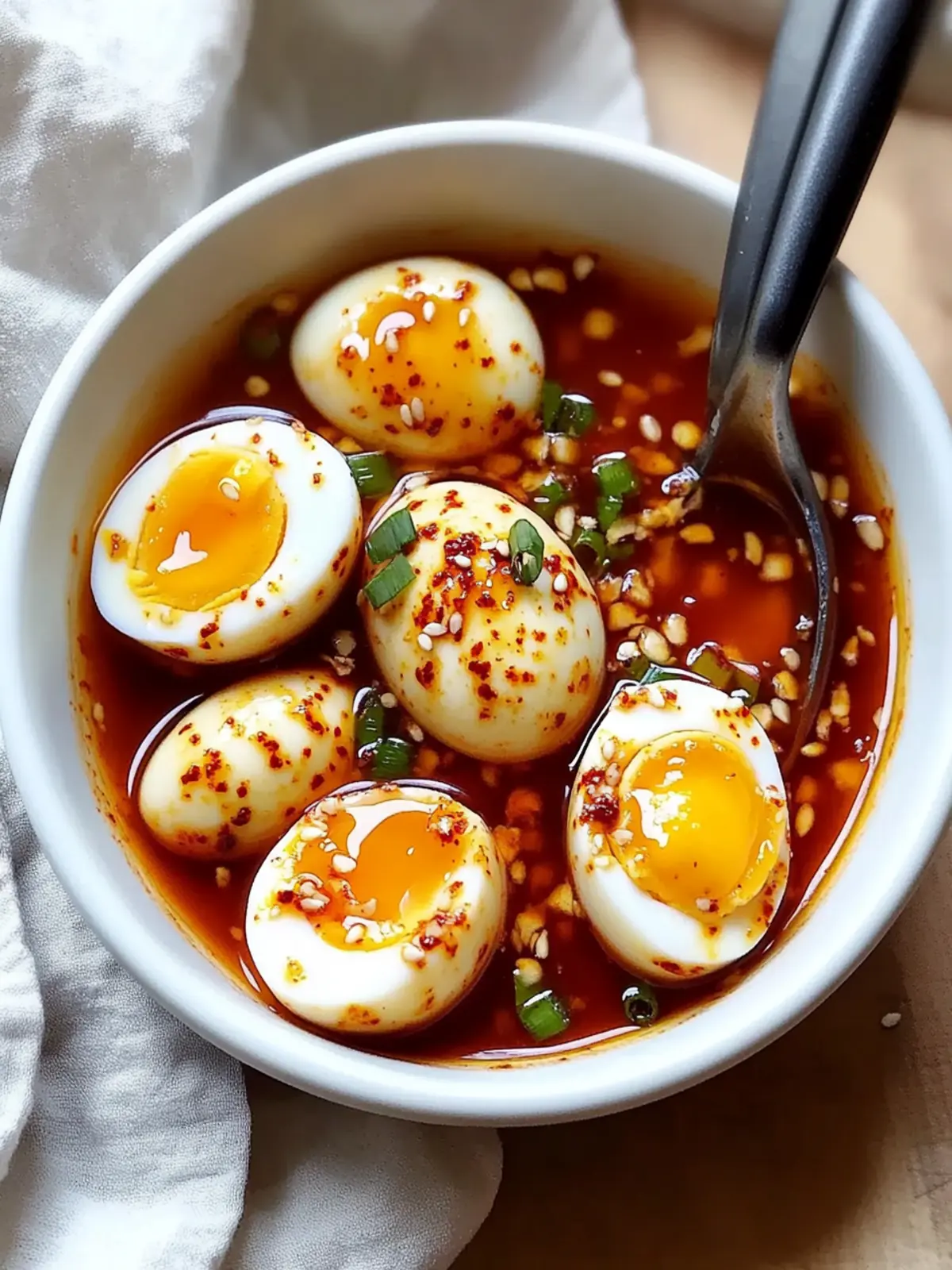
Spicy Gochujang Eggs: Elevate Your Breakfast Game Today
Ingredients
Equipment
Method
- Boil the Eggs: Bring a pot of water to a boil. Once bubbling, carefully add the eggs, cover, and boil for 6–9 minutes according to your preferred doneness.
- Ice Bath: Once the eggs are done, transfer them to an ice bath to halt the cooking process. Let cool for a few minutes to make peeling easier.
- Prepare Sauce: In a mixing bowl, combine gochujang, soy sauce, sugar, rice vinegar, and chicken stock. Whisk until well blended, then set aside.
- Cook Sauce: Heat a splash of neutral oil in a skillet over medium-high heat. Sauté minced garlic until fragrant, about 15 seconds, then add the sauce mixture to the skillet. Simmer gently for a couple of minutes.
- Combine Eggs and Sauce: Add the peeled eggs to the skillet and gently turn to coat them evenly in the sauce. Cook for an additional 3 minutes.
- Serve: Plate the eggs over steamed rice, garnishing with sliced scallions and a sprinkle of toasted sesame seeds.